
How to Prevent Frozen Pipes in Fairfield County Homes
Every winter, homeowners across Fairfield County wake up to the same unwelcome sound. Water where water should not be. A rush behind a wall, a drip from a ceiling, or a growing puddle in the basement.
Frozen pipes are one of the most common and most preventable winter plumbing failures. When water freezes inside a pipe, it expands with enough force to split copper, crack plastic, and destroy fittings. The crack often stays hidden until temperatures rise, which is when the real flooding begins.
After more than 30 years fixing what water does to Fairfield County homes, we can tell you this with certainty. The homeowners who prepare in October and November are the ones who stay dry in January and February.
This guide walks through why local homes are vulnerable, how a frozen pipe actually bursts, a prevention checklist you can complete in one afternoon, and what to do the moment a pipe fails.
Why Fairfield County Homes Are Vulnerable
Fairfield County has a distinct mix of housing stock. Many homes were built in the mid twentieth century, and some are far older. That means original plumbing in exterior walls, unheated basements, and crawl spaces that were never designed for today’s temperature swings.
Our climate adds another layer of risk. Coastal towns like Stamford and Greenwich see frequent freeze and thaw cycles through the winter. Inland towns such as Wilton and Ridgefield dip lower overnight, especially in wooded areas where tree cover traps cold air near the ground.
In short, our homes are beautiful, historic, and full of character. They also need attention before the first hard freeze.
How Frozen Pipes Actually Burst
Most people assume a pipe bursts because ice expands inside it. That is only part of the story.
Water freezes from the outside in. As ice forms along the pipe wall, it pushes the remaining liquid water toward the closed end of the line. That trapped water has nowhere to go, and the pressure inside the pipe can climb to extraordinary levels. The pipe does not split where the ice is. It splits downstream, often in a completely different room from where the freeze started.
This is why a frozen pipe in an upstairs bathroom can flood a kitchen ceiling three rooms away. It is also why catching a freeze early matters so much.
Your Fall Prevention Checklist
The following steps take one afternoon. Each one meaningfully reduces your risk.
Insulate Exposed Pipes
Foam pipe insulation costs a few dollars per section and installs in minutes. Focus on pipes running through basements, crawl spaces, garages, and along exterior walls. Pay close attention to elbows, joints, and any point where a pipe meets the exterior wall, since these are the first places to freeze.
Seal Drafts and Gaps
Cold air enters through smaller openings than most homeowners expect. Check around foundation walls, basement windows, dryer vents, and any point where pipes pass through the exterior. Seal gaps with caulk or spray foam.
Disconnect and Drain Outdoor Hoses
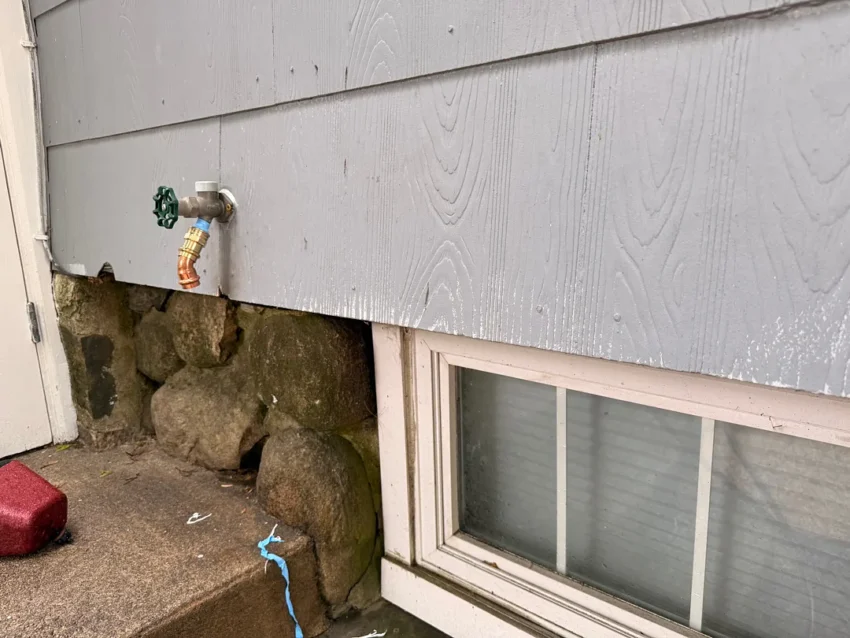
This is the single most common freeze point in any home. Shut off the indoor valve feeding each outdoor spigot. Open the outdoor spigot to drain remaining water. Disconnect garden hoses, drain them, and store them indoors for the season.
Keep a Slow Drip on the Coldest Nights
When temperatures drop well below freezing, let a faucet on an exterior wall drip slowly. Moving water freezes far more slowly than standing water. Open cabinet doors under sinks on exterior walls so warm indoor air can reach the pipes.
Set Your Thermostat Correctly
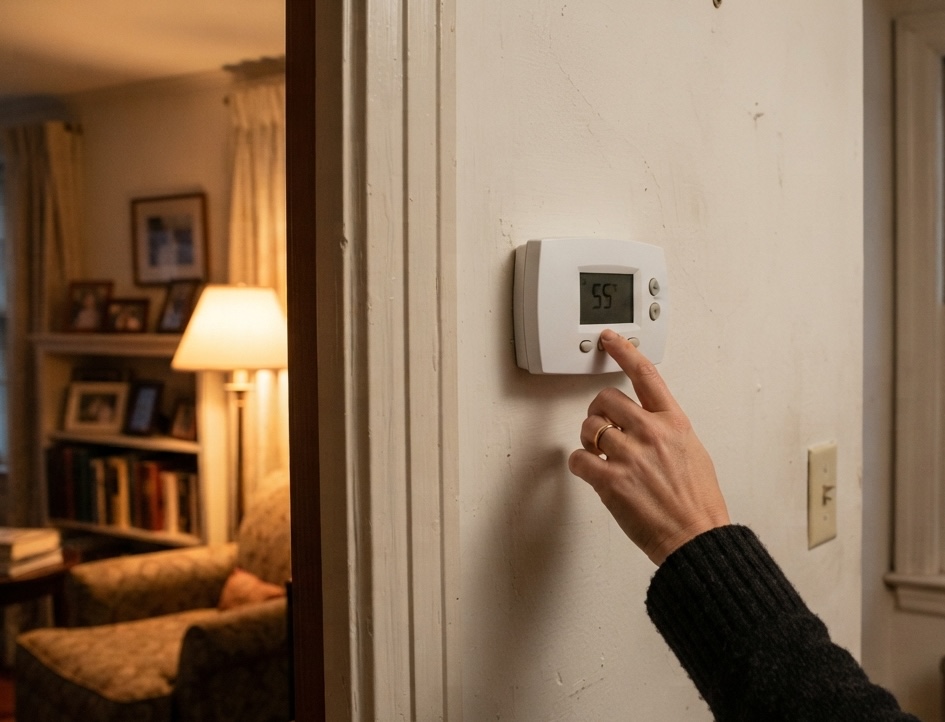
If you travel during winter, set your thermostat to at least 55 degrees. Do not shut the heat off completely. Ask a neighbor to check your home after any severe cold snap.
Know Where Your Main Shutoff Valve Is
If a pipe does burst, seconds matter. Locate your main valve, learn how to turn it, and test it before winter arrives. If it feels stuck or will not close fully, have a professional inspect it now rather than during an emergency.
The Moment a Pipe Bursts: What to Do First
If a pipe fails, stay calm and move quickly. The order of these steps matters.
- Shut off the main water supply. Go directly to your main valve and turn it clockwise until it stops. If you cannot reach it, close the individual valve nearest the leak.
- Open a faucet to drain pressure. Open the lowest faucet in your home. This drains remaining water from the lines and reduces pressure on the cracked section.
Cut power to the affected area. Water and electricity are a dangerous combination. If the leak is near outlets or appliances, turn off power at the breaker box. Never stand in standing water while touching electrical equipment.
Contain and document the damage. Use towels, buckets, and anything absorbent. Move furniture and belongings away from the water. Take photos and short videos before cleaning anything, since your insurance company will want them.
Call a licensed plumber immediately. A burst pipe is not a do it yourself repair. Temporary patches will not hold under normal water pressure. If you need emergency plumbing services, our team is available around the clock and typically arrives within an hour.
When to Call a Professional
Some situations require expert help right away.
Call a licensed plumber if you can’t locate your main shutoff valve, if the leak is inside a wall or ceiling, if water has reached electrical components, or if you have had a pipe burst before in the same area. Repeat failures usually point to a larger issue, such as aging piping, incorrect installation, or chronic freezing in a specific section.
In those cases, a professional plumbing installation may be the better long term solution. Replacing vulnerable sections before they fail costs far less than restoring a flooded basement.
If your home has had repeated winter problems, a preventive inspection can identify weak points and recommend targeted upgrades. We also offer a full range of plumbing services to address everything from pipe insulation to full repiping.
A Note on Older Homes
Homes near landmarks such as the Maritime Aquarium in Norwalk, downtown Stamford, or Ridgefield’s Main Street often date back further than homeowners realize. Original galvanized or early copper piping was not designed for the temperature swings we now see.
If your home is more than forty years old and you have never had the plumbing inspected, this is the right season to do it. A short assessment today can prevent an expensive surprise in February.
The Bottom Line
Frozen pipes are one of the few winter plumbing problems that homeowners can largely prevent. Insulate what you can see. Seal what you can reach. Drain what sits outside. Keep the heat on.
And if something does fail, know your shutoff valve, act quickly, and call a professional before the damage spreads.
Our team at Valerio Emergency Plumbing is ready to help Fairfield County homeowners prepare for winter and respond when the unexpected happens. Contact us to schedule a preventive inspection or to request service today.
Wilton | Stamford | Norwalk | All of Fairfield County
At Valerio Emergency Plumbing, we know no one plans for plumbing issues. That’s why we are on call… all the time.
If you noticed any warning signs in this article, or simply want peace of mind before the holiday rush, we are ready to help with a property protection mindset.
Local Accountability
Serving Fairfield County, CT
Valerio Emergency Plumbing is local, family owned and operated, proudly serving Connecticut communities with rapid assessment and professional execution. We are fully licensed and insured in the state of Connecticut.
Valerio Emergency Plumbing
- 23 Pearl St, Norwalk, CT 06850
- Dispatch. 24 Hours a day. 7 days a week.