Your water heater works quietly in the background, day after day, year after year. You turn on the hot water and it’s there, every time. But like any hardworking appliance, it won’t last forever. And when it fails, it rarely fails small.
A 40-gallon tank holds enough water to flood an entire basement. A 75-gallon tank can do even more damage. The difference between a simple replacement and a catastrophic flood often comes down to one thing: catching the warning signs early.
Early fall is the perfect time to check your water heater. The weather is still mild, plumbers have more availability, and you have time to plan before the holiday rush and before winter makes everything harder.
Don’t wait until January to discover your water heater is failing. A proactive check now could save you thousands in damage and a week of cold showers.
Here are the warning signs every Fairfield County homeowner should know.
Winter in Fairfield County is relentless. Frozen pipes, power outages, and freezing temperatures put enormous strain on your home’s systems, especially your water heater. It works harder, longer, and under more pressure than any other time of year.
When a water heater fails in January, you’re facing:
In the fall, you have time. You can schedule a water heater inspection, compare replacement options, and make an informed decision without the pressure of an emergency. A proactive approach today means fewer surprises tomorrow.
After more than 30 years of plumbing work in Fairfield County homes, we can tell you: water heater failures almost never happen at a convenient time. That’s why fall is your window of opportunity.
Age is the single most important factor in water heater reliability. Most conventional tank water heaters last between 8 and 12 years. If yours is approaching or past that mark, you’re living on borrowed time, even if it seems to be working fine.
What to do:
Why it matters: A planned replacement is a scheduled job with a known price. An emergency replacement after a flood costs the same, plus water damage restoration, which can run many times the cost of the heater itself.
If you notice orange-brown or rusty water coming from your hot taps, your tank is rusting from the inside out. The porcelain-lined steel tank eventually develops pinhole leaks, and once you see rust in the water, the tank is already compromised.
What to look for:
What to do: If you see rust, start planning for replacement. A rusted tank is failing. It’s not a question of if it will leak. It’s when.
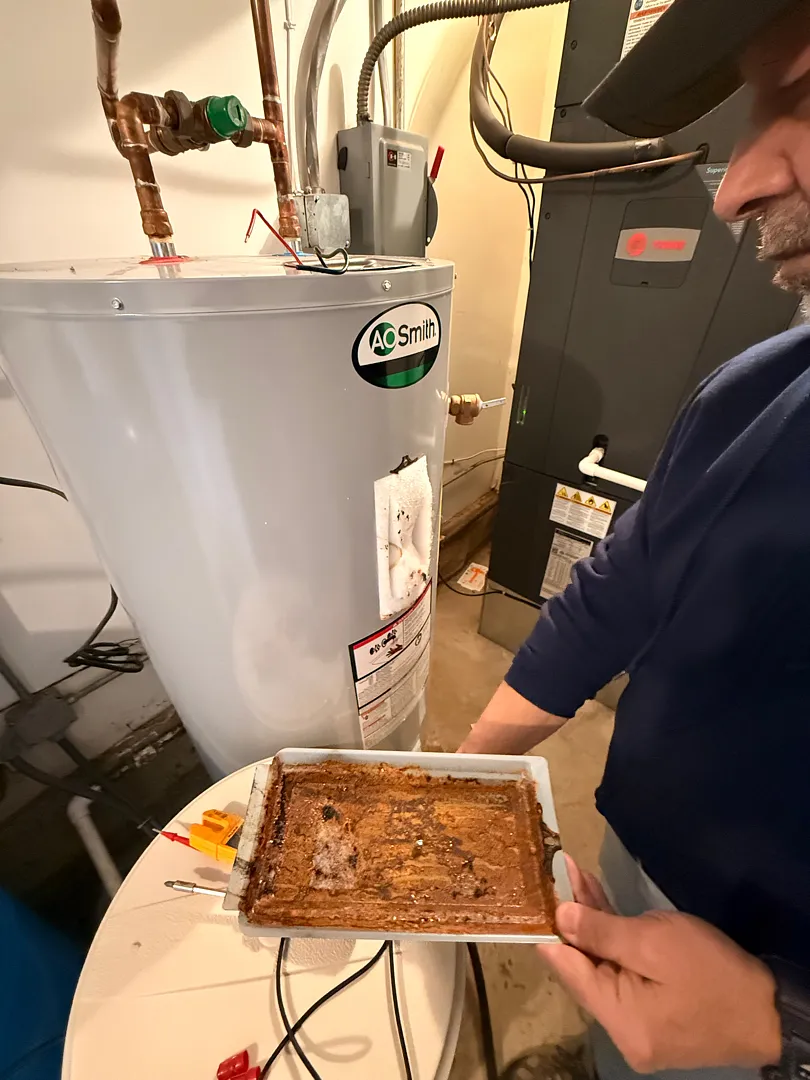
A healthy water heater runs quietly. When you start hearing rumbling, popping, or banging sounds, sediment has built up at the bottom of the tank. The water heater works harder to heat through that layer, and the extra heat can crack the tank lining.
What to listen for:
What to do: Schedule a professional inspection. Flushing the tank may help if caught early, but if the sediment has hardened, replacement is often the better option.
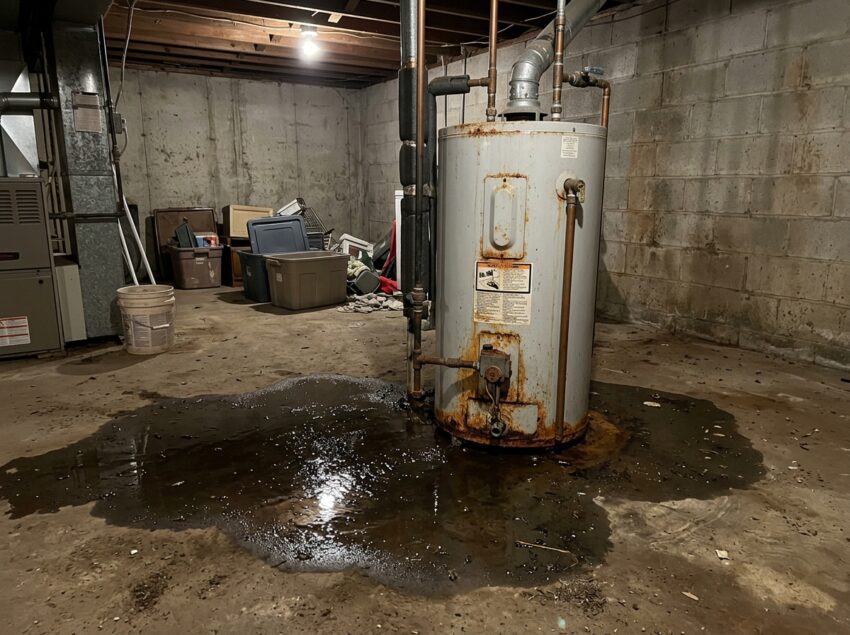
Any water pooling around the base of your water heater is a red flag. It could be a small drip from a loose fitting, or it could be a crack in the tank itself.
What to look for:
What to do: If you see any water at the base, call a 24/7 emergency plumber immediately. Don’t wait to “see if it stops.” A cracked 40-gallon tank releases 40 gallons of water within minutes. In a basement, that’s a flood.

Is your shower suddenly turning cold? Does the hot water run out faster than it used to? These are classic signs of sediment buildup or failing heating elements.
What to look for:
What to do: If the problem is sediment, a professional flush may help. But if the tank is aging, replacement is often the more cost-effective solution.
Your water heater accounts for nearly 20% of your home’s energy usage. When it becomes less efficient, due to sediment buildup or aging components, your energy bills creep up.
What to look for:
What to do: If your bills are rising and your water heater is over 8 years old, a new, more efficient model could pay for itself in energy savings over time.
If you recognize any of these warning signs, don’t panic. But don’t ignore them either.
Step 1: Schedule a professional inspection. A licensed plumber can assess your water heater’s condition, test for leaks, and recommend whether repair or replacement is the best option.
Step 2: Consider your options. If replacement is recommended, you have choices. Valerio Emergency Plumbing installs premium brands including Navien, Rheem, Bradford White, Bosch, and Weil-McLain, all known for reliability, efficiency, and long service life.
Step 3: Plan for installation before winter. September and October are ideal months for replacement. The weather is mild, plumbers have more availability, and you won’t be rushed into a decision during an emergency.
Your water heater is one of the most flood-prone appliances in your home. A few minutes of inspection today, and professional maintenance every year, can save you from a basement swimming pool tomorrow.
Watch for rust, listen for rumbling, and never ignore water at the base. And if you’re unsure, call a plumber for a quick health check.
If you’re noticing any of these warning signs or want peace of mind before winter, Valerio Emergency Plumbing is here to help. Our team of licensed professionals serves Fairfield County with fast response and 24/7 dispatch. We’ll inspect your system, explain your options in plain English, and help you choose the right solution for your home. No pressure, no scare tactics.
Wilton | Stamford | Norwalk | All of Fairfield County
At Valerio Emergency Plumbing, we know no one plans for plumbing issues. That’s why we are on call… all the time.
Most conventional tank water heaters last 8 to 12 years. Tankless units can last longer with regular maintenance. If yours is past 8 years, start planning for replacement even if it still works.
Sometimes. If sediment is caught early, a professional flush can restore performance. Once sediment has hardened, or if the tank is rusting or leaking, replacement is the safer choice.
Yes, if it’s showing any of the signs above and is over 8 years old. A planned replacement is scheduled on your terms. A failed tank means an emergency call and possible water damage.
It depends on how many people live there and how much hot water you use at peak times. A licensed plumber can size it correctly during an inspection.
Valerio Emergency Plumbing is local, family owned and operated, proudly serving Connecticut communities with rapid assessment and professional execution. We are fully licensed and insured in the state of Connecticut.
Master Plumbers delivering rapid-response emergency plumbing for residential and commercial properties. Your trusted partner in protecting and restoring critical water systems.
Master Plumbers delivering rapid-response emergency plumbing for residential and commercial properties. Your trusted partner in protecting and restoring critical water systems.
Copyright © 2026 Valerio Plumbing │ Made with Love by mcmmarketing.us